


Startup Data Strategy for Humans: Why Your Biggest Data Challenge Isn't Technical

This post is a partnership with David Cohen of Superposition
Contrary to popular belief, data is not a thing you solve for. It’s a process you manage.
For most startups, that process starts out innocently enough: you capture data about clients, products, services, operations, and people to understand how your business works.
But as you grow, that accumulation very quickly turns into confusion:
- Never-ending versions of the “truth” depending on who’s asked
- Dashboards and tools that constantly break
- Metrics no one trusts (because nobody knows where they came from)
The problem, however, isn’t the data itself.
As a startup, you face a web of really unique obstacles: departments and systems that are siloed and don’t talk to each other, tools that have been outgrown, and data quality issues that everyone knows about but no one has any time to fix.
Unlike enterprises, you don’t have an army of “data people” to untangle that web.
So that pain point becomes “We need to do something about our data.” A classic problem we consultants face.
What I've learned after more than a decade as a data strategist (and now leading Superposition, where I help consultancies build Data & AI strategies through gamified workshops) is that the answer is the human processes behind the technical work: the plan that aligns your people, the events and steps that generate your data, and the insights they create.
A data strategy.
Data Strategy Defined
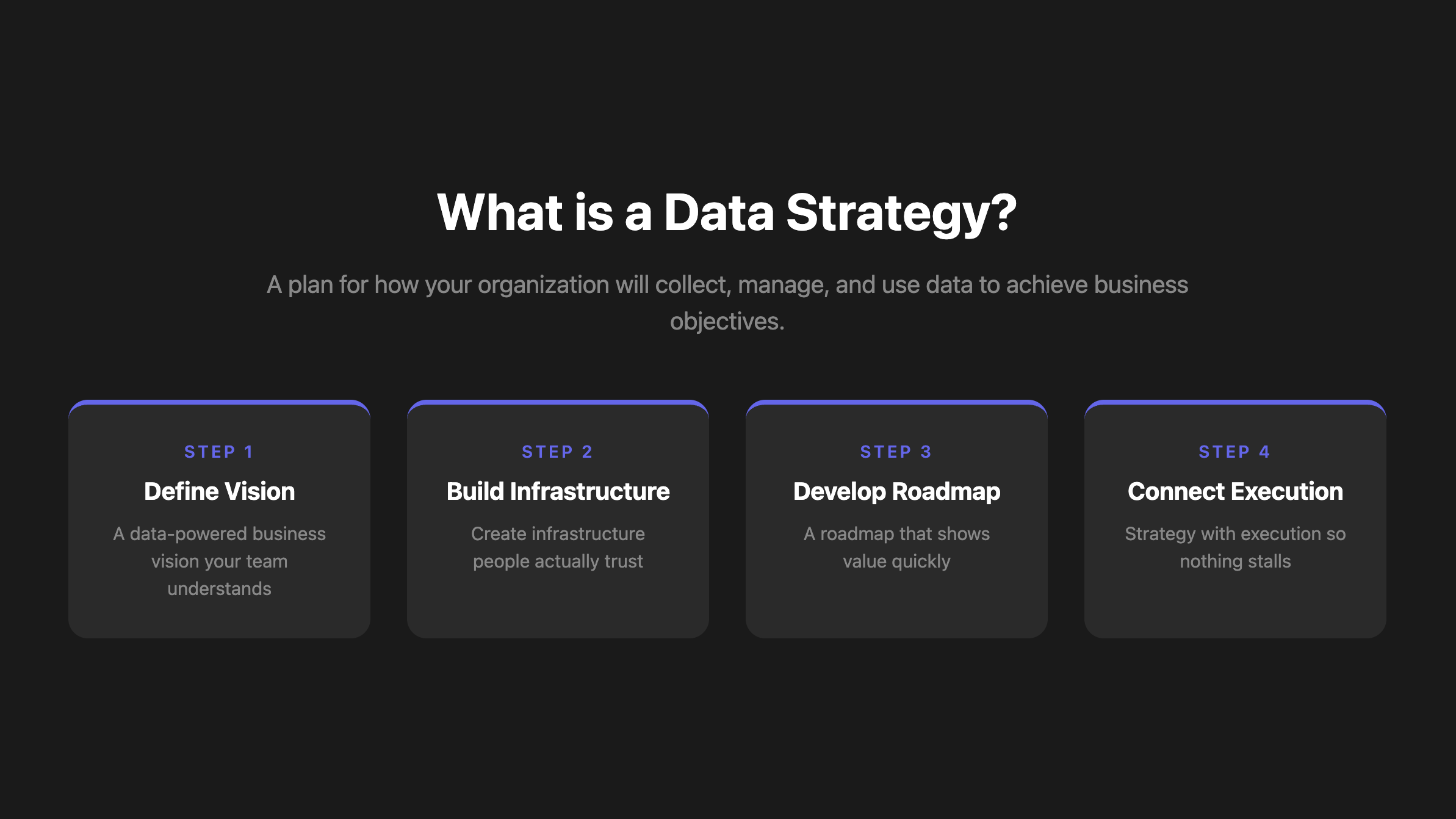
A data strategy is a plan for how your organization will collect, manage, and use data to achieve business objectives. For a startup, this doesn't mean sophisticated infrastructure. It means creating enough structure that your team can make confident decisions without getting lost in chaos, while staying nimble as you grow.
In this article, we'll explore how to build that plan:
- Define a data-powered business vision that your team understands
- Create infrastructure people trust
- Develop a roadmap that shows value quickly
- Connect strategy with execution so your initiative doesn't stall
So let's start with the most challenging part: getting everyone aligned on what success looks like!
Defining a Clear Business Vision for Data
Let’s be real: you probably don't actually want to be "data-driven.” What you want is to make better decisions, reduce risk, find growth opportunities, or operate more efficiently through the data available to you. Data is a tool, not the destination.
For startups specifically, becoming meaningfully data-driven requires starting with the "what's in it for me" question for every person on their team, and building processes that address the realities of their day-to-day work. For example:
- Your CFO cares about accurate MRR calculations from Stripe and investor-ready reporting, not data warehouse architecture.
- Your salespeople care about prioritizing leads, not BI tool performance
- Your marketing team cares about segmentation data to optimize campaigns, not data lineage
This is why translation work is the key that unlocks data strategy. Data people talk about pipelines and dashboards. Your business team talks about quarterly targets, customer satisfaction, and efficiency.
Creating an effective data strategy means constantly translating between both languages and defining a path for improvement across both sides.
The problem is that achieving that alignment requires understanding your reality as it exists today. Too many startups rush to implement analytics platforms without first establishing what questions they're trying to answer and why those questions matter to real decisions.
This is how you end up with fancy dashboards that nobody uses.
This also means facing tough conversations internally about what your data can and cannot tell you. Most startups have data quality problems, process gaps, or practices that make certain goals impossible in the short term. Acknowledging these limitations honestly while defining a long-term path to improvement builds more trust in data than any other alternative.
Remember: you need to trust the data in front of your eyes before you can use it for anything else.
Building Infrastructures and Systems People Believe In
When we data nerds talk about infrastructure, we’re talking about the foundation through which data moves in your organization. This includes where data is stored, sure, but also how it's processed, what tools people use to access it, and the rules governing who can see what, and how things are defined.
This is all the plumbing: When it works, nobody notices.
When it breaks, though, everyone freaks out.
The typical mistake most startups make is treating infrastructure design as a strictly technical exercise. You hire someone (or task your IT person, if you have one), specify needs & requirements, and build systems in isolation from the people who will actually use them. Then you're shocked when things stop working, or the results can’t be trusted.
Infrastructure built for people starts with understanding how people actually work: How do your salespeople currently track opportunities? What does your operations team do when they need to check inventory? Where does your finance team go when they're building forecasts?
You need to understand your reality before asking people to evolve with data.
The best practice here is involving end users in infrastructure decisions during the design phase, not after deployment. This doesn't mean letting non-technical stakeholders mandate tech stack choices, but it does mean showing them early versions of internal tools, gathering feedback on how they use them, and adjusting based on how they work in reality. A slightly less elegant solution that your team actually uses is exponentially more valuable than a perfect system that goes straight in the trash.
This is where platforms like Definite become valuable for startups. Rather than building custom data infrastructure completely from scratch, you need a solution that can help you quickly build the structure you need. Definite is specifically designed for teams that need to manage their data without requiring a dedicated data team. It's the practical way that makes sense when you're trying to bring your data strategy to reality without overdoing it.
Building trust in your infrastructure is essentially about transparency. When someone looks at a dashboard, they should be able to understand where those numbers came from and why they might differ from what they saw last week. This requires documentation, sure, but it also requires building systems that involve business users from the beginning rather than requiring them to understand technical details they shouldn't need to know.
Building a Tangible Roadmap for Your Growing Business
For smaller organizations, data strategy needs to deliver value quickly while building toward something sustainable. The key question is "what specific business problems can we solve in the next 90 days using data we already have or can easily collect?"
What specific business problems can we solve in the next 90 days using data we already have or can easily collect?
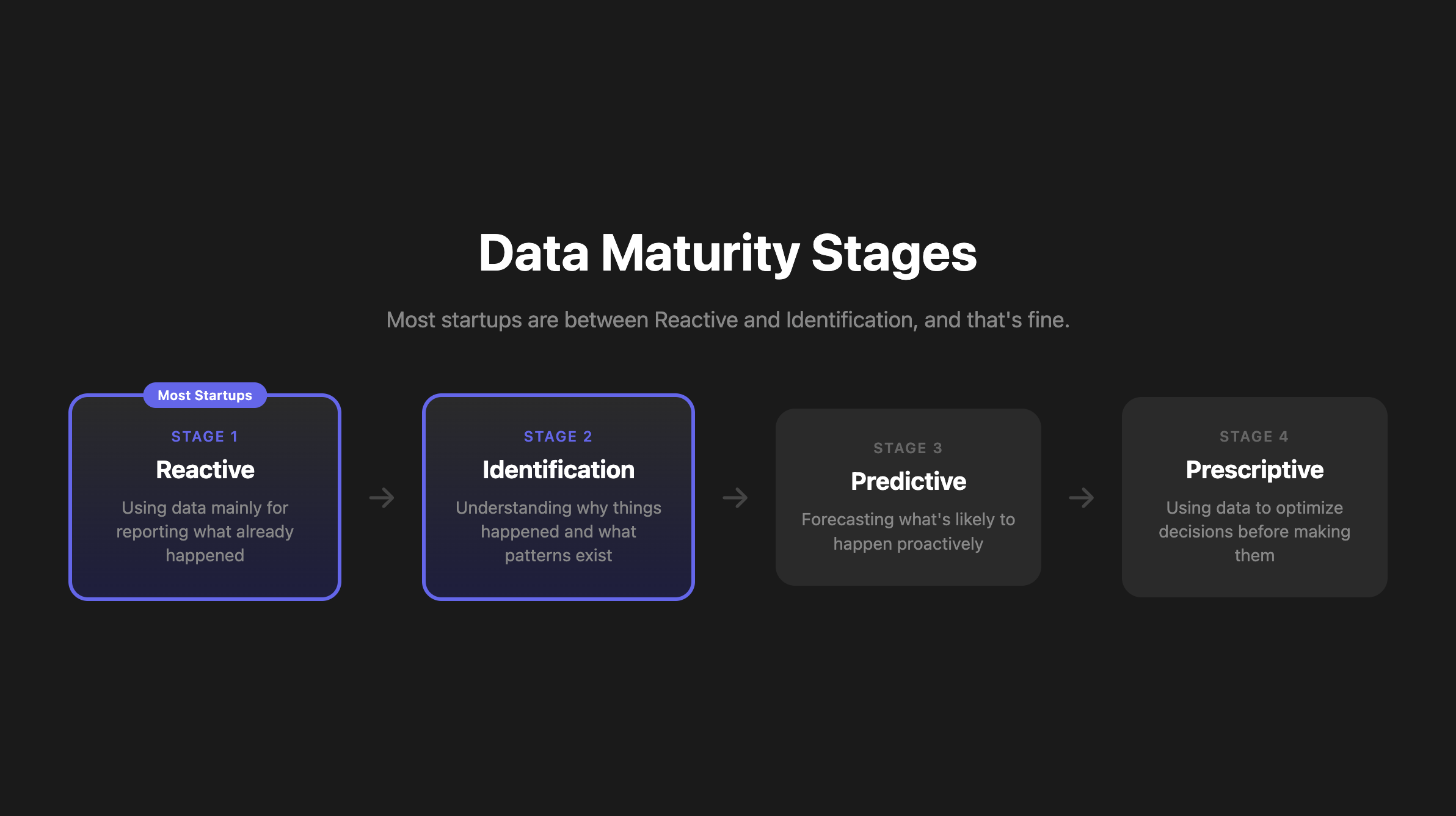
Startups typically evolve through the same predictable stages with data:
- Reactive: using data mainly for reporting what already happened.
- Identification: understanding why things happened and what patterns exist.
- Predictive: forecasting what's likely to happen proactively.
- Prescriptive: using data to optimize decisions prior to making them.
Most startups are somewhere between reactive and identification, and that’s totally fine.
The goal of building a data strategy isn’t to immediately get you to the prescriptive stage but rather to give you a sense of where you are and what your evolution journey looks like.
In 2026, if you're a traditional business in the process of modernizing your data, you're probably at an inflection point where informal data practices stop working, and you need something more structured.
To do this, you need to work with what you already have. Your data strategy should leverage these existing resources rather than assuming you need to hire a whole data team.
This might mean upskilling someone on your team, having your technical teams own data pipelines, or working with platforms like Definite to augment your team strategically without breaking the bank.
The right tools and processes can meaningfully scale the effectiveness of the team you already have. When your existing staff can manage data workflows, quality checks, and governance processes through platforms built for their skill level, you avoid the usual trap of either under-investing (staying 15 years behind the curve) or over-investing (buying tools that sit unused because nobody gets them).
What decisions need better data?
Enter your domain and we'll show you the strategic questions your tools can already answer - you just need the right foundation to ask them.
Try it with any company domain — no signup required.
Bringing It All Together Tactically
When it’s time to marry strategy and execution, most startup data projects stall. If you've done the strategic thinking, defined what matters, and designed infrastructure that makes sense, the next step often feels almost overwhelming because of its breadth.
The most effective approach to this combines strategic work (defining the vision, involving your team members, planning the growth roadmap) with tactical platforms that support execution. At Superposition, we help consultancies define data strategies for their startup clients through workshop-based frameworks. But these workshops only create value when there are tools and processes that allow the implementation of what’s been designed.
This is why we point our clients toward platforms like Definite. The strategic work we do together (understanding what data matters, defining real business needs, prioritizing initiatives) needs a practical home where it can be put into practice.
You need a platform that can grow with you as you move from basic data quality management to more sophisticated governance and analytics, and provide a unified view of all the pieces that matter.
For startups, this means selecting platforms that match your current maturity level and immediate needs rather than buying for some future state that may never arrive. It also means building a realistic roadmap that prioritizes work based on ROI, addressing data quality issues, establishing basic governance, and proving value with simple solutions before tackling complex ones.
A proper data strategy includes governance (who owns what data and how decisions are made), management (how you maintain quality and handle changes), and culture (how you build data literacy). Still, these need to happen sequentially so that the impact of the work can be realized sustainably.
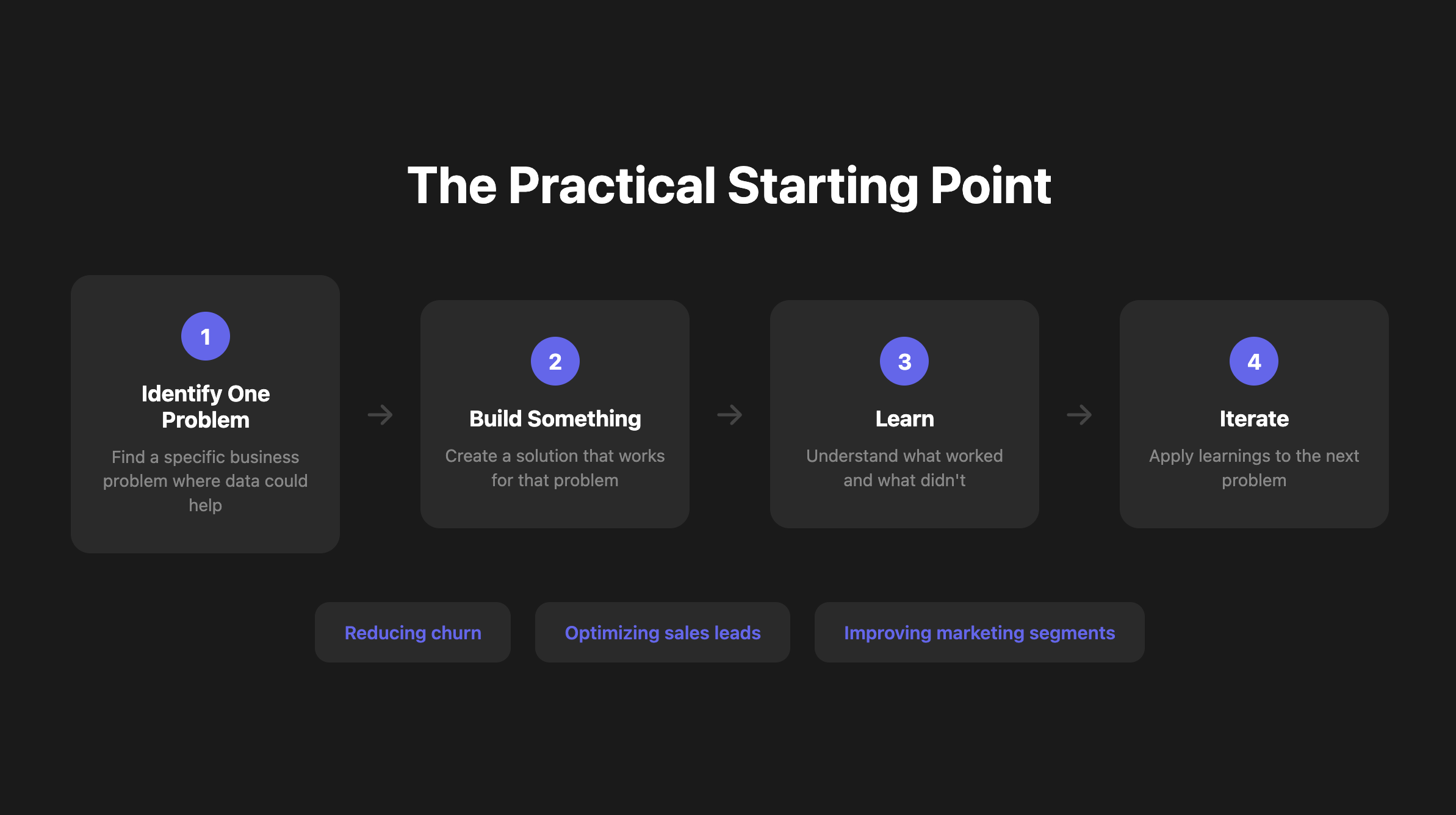
The practical starting point for most startups is to identify one specific business problem where better data could make a measurable difference in the short term.
Maybe it's reducing churn, optimizing sales leads, or improving marketing segments.
Focus there, build something that works, learn from the process, and then iterate.
This approach builds momentum and organizational confidence way more effectively than trying to take on an unmanageable effort all at once. With the right combination of strategy and practicality, you can create just enough structure for your team to make the right decisions without drowning in complexity.
From Data Strategy to Data Culture
Data strategy for startups ultimately succeeds or fails based on whether your team understands it, trusts it, and uses it to make better decisions. The technology matters, but it's always in service of human needs and organizational change.
When you get this foundation right, something really interesting happens: data strategy evolves into a data culture. All the frameworks we’ve talked about become an invisible scaffolding that allows your team to use data in their day-to-day without worrying about the details. That is the real goal, and we’ll explore it in an upcoming article as well.
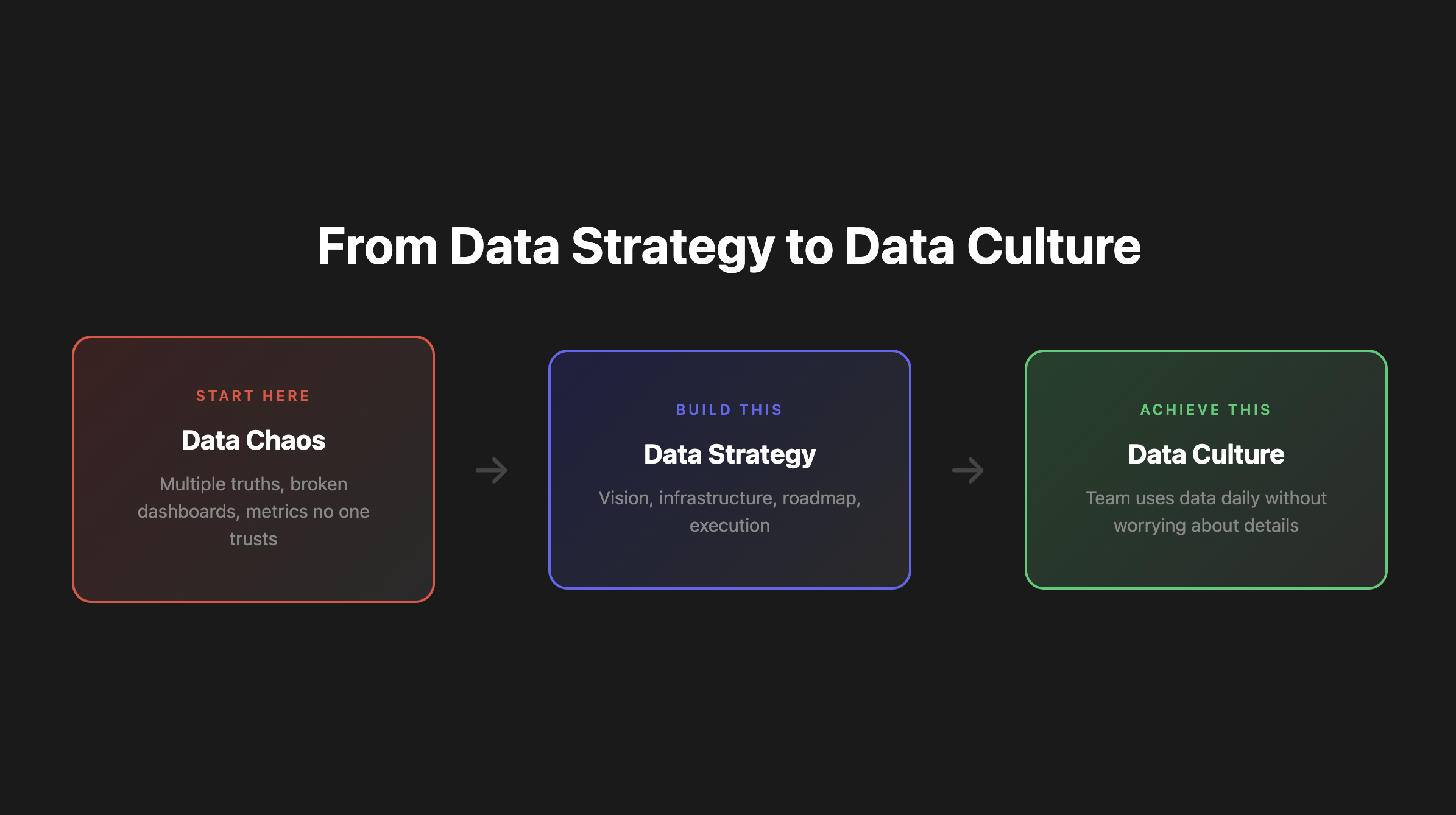
You can’t skip straight there, though. Remember where we started: never-ending sources of truth, constantly-breaking dashboards, metrics nobody trusts.
Solve that problem first, explain to your team why it matters to them in a language they can understand, and work on defining a plan to make that real for them without overwhelming them.
That’s what building a human-powered data strategy is.
Sounds straightforward, but it isn’t easy.
It all happens in the space between strategic vision and tactical execution. It requires striking the right balance between people-focused thinking and practical tools to turn data chaos into a strategic advantage for your organization.